
A genome study of Pokémon Emerald
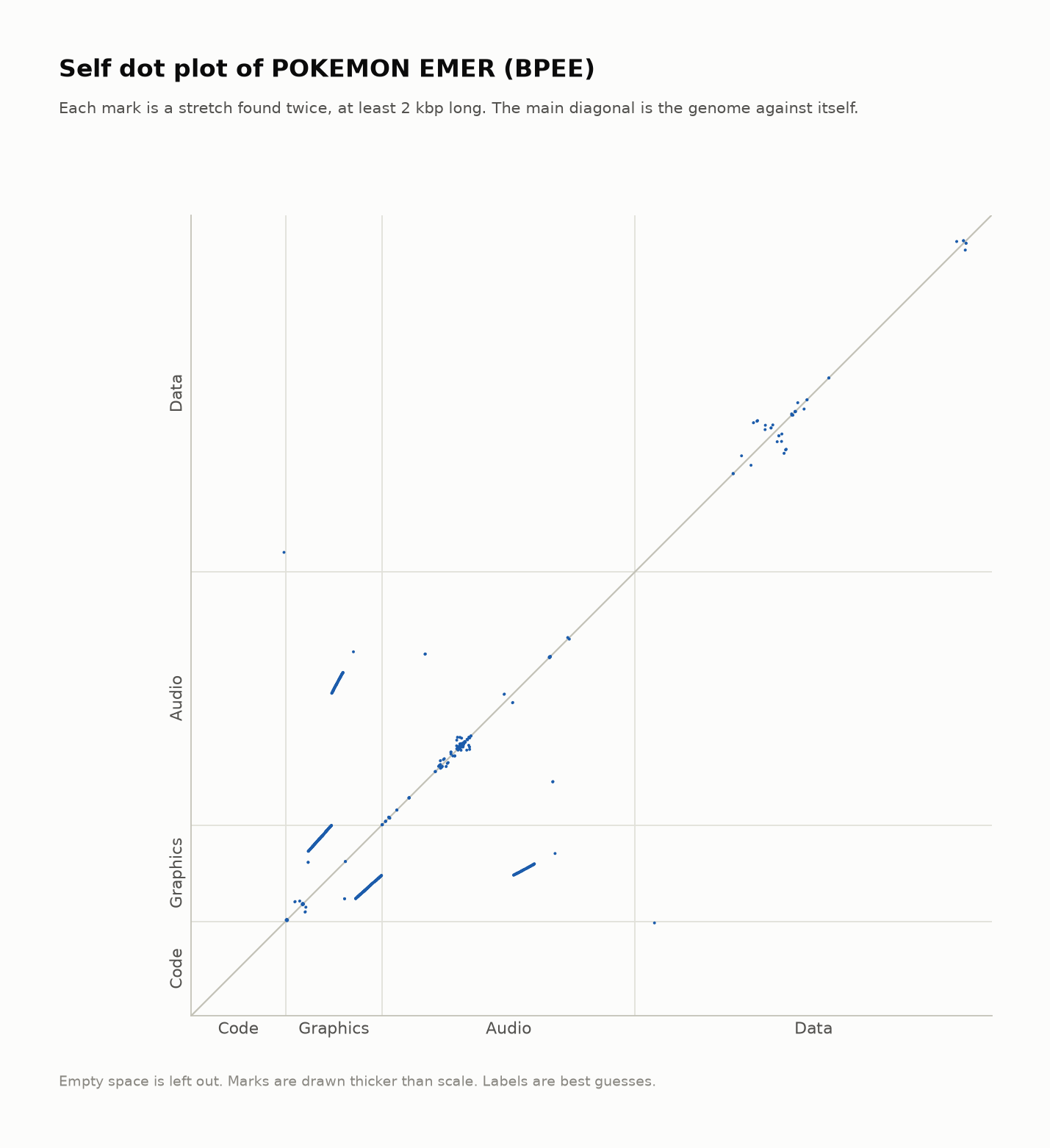
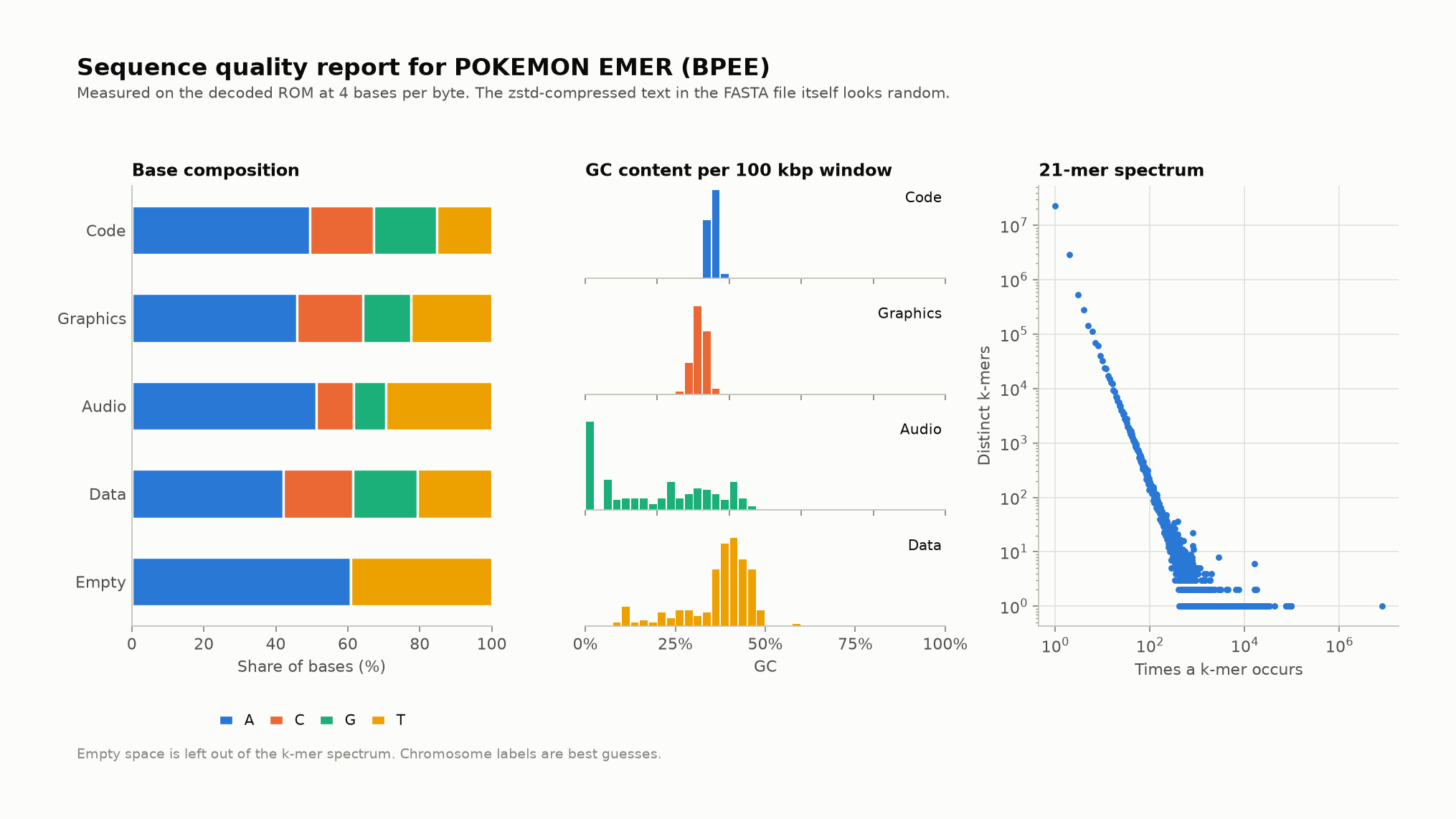
What if a game cartridge were sequenced like an organism? These are the usual figures of a genome paper, measured on one game. The numbers are real, the biology is a joke: a chromosome here is a best guess at what a part of the ROM holds, and those labels can be wrong.
The figures read the decoded ROM at 4 bases per byte. The FASTA file itself stores compressed data, which looks like random sequence. The figures hold only measurements, never any part of the game.
| Chromosome | Length | GC | Contigs |
|---|---|---|---|
| chrData | 24.6 Mbp | 37.2% | 397 |
| chrAudio | 17.5 Mbp | 19.5% | 18 |
| chrEmpty | 11.9 Mbp | 0.0% | 18 |
| chrGraphics | 6.6 Mbp | 31.7% | 277 |
| chrCode | 6.5 Mbp | 35.3% | 92 |
| chrHeader | 768 bp | 42.7% | 1 |
Curiosity: Emerald's genome twin


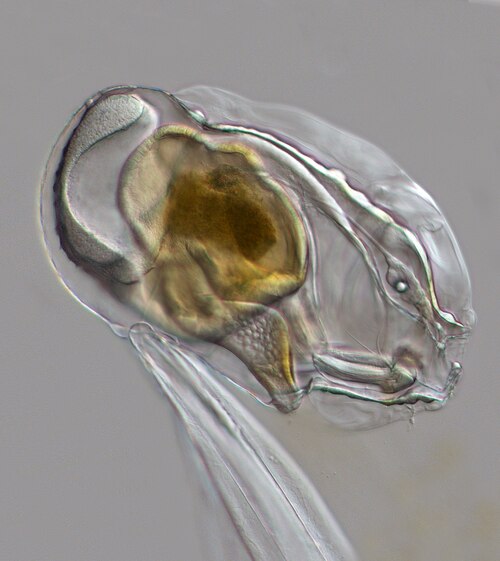
| Pokémon Emerald | Oikopleura dioica | |
|---|---|---|
| Genome | 67.1 Mbp | 65–70 Mbp |
| Chromosomes | 6 (best guesses) | 3 pairs |
| Life cycle | Until you stop playing | About 4 days at 23 °C |
Oikopleura dioica is a tiny tadpole-shaped sea creature that filters food through a mucus house it keeps abandoning and rebuilding. It is a tunicate, the sister group of vertebrates, and has one of the smallest genomes of any sequenced animal. The match is only in size: Emerald reaches 67.1 Mbp at 4 bases per byte, and estimates for the animal vary between populations and methods. Sources: Bliznina et al., 2021, larvaceans on Wikipedia.
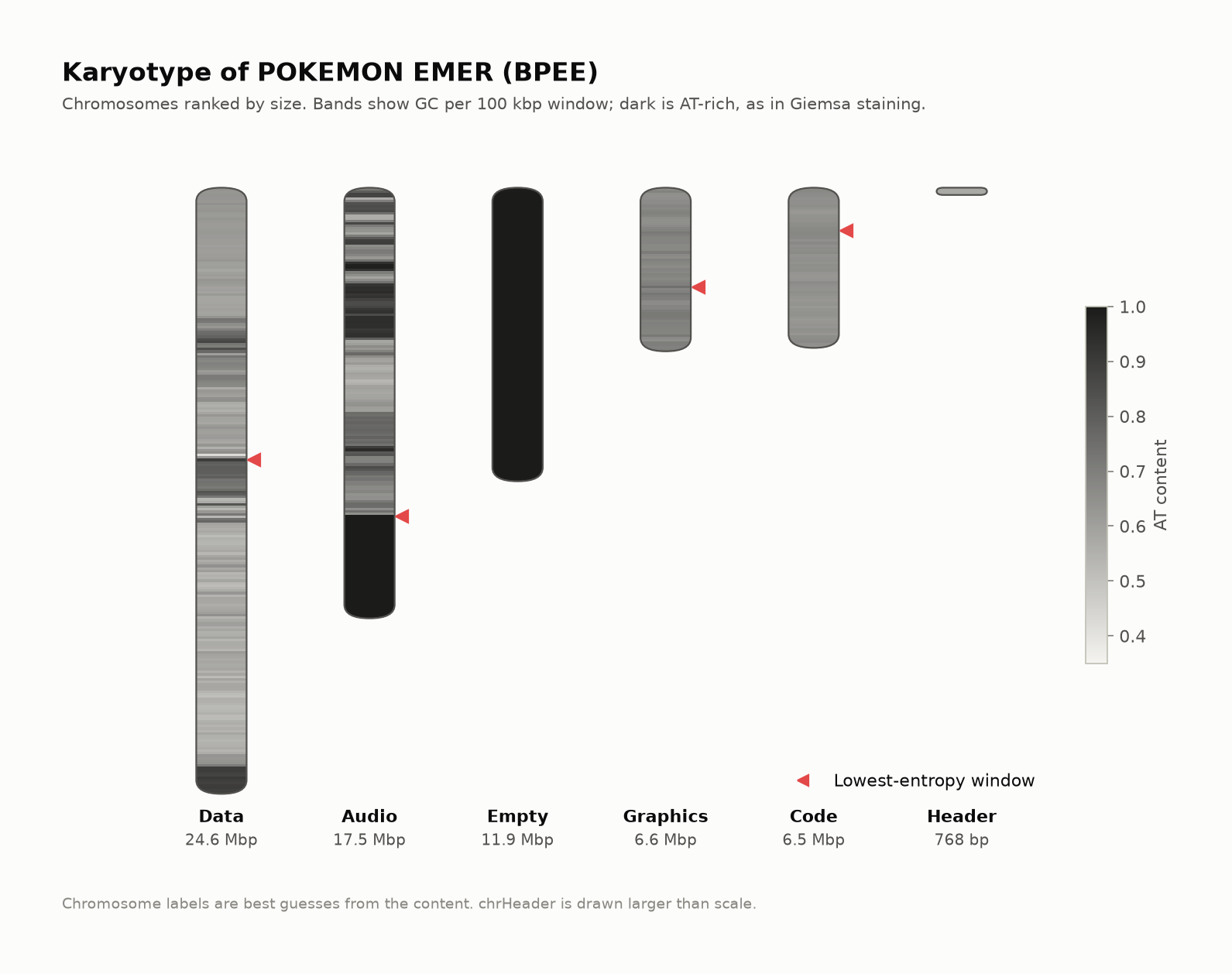
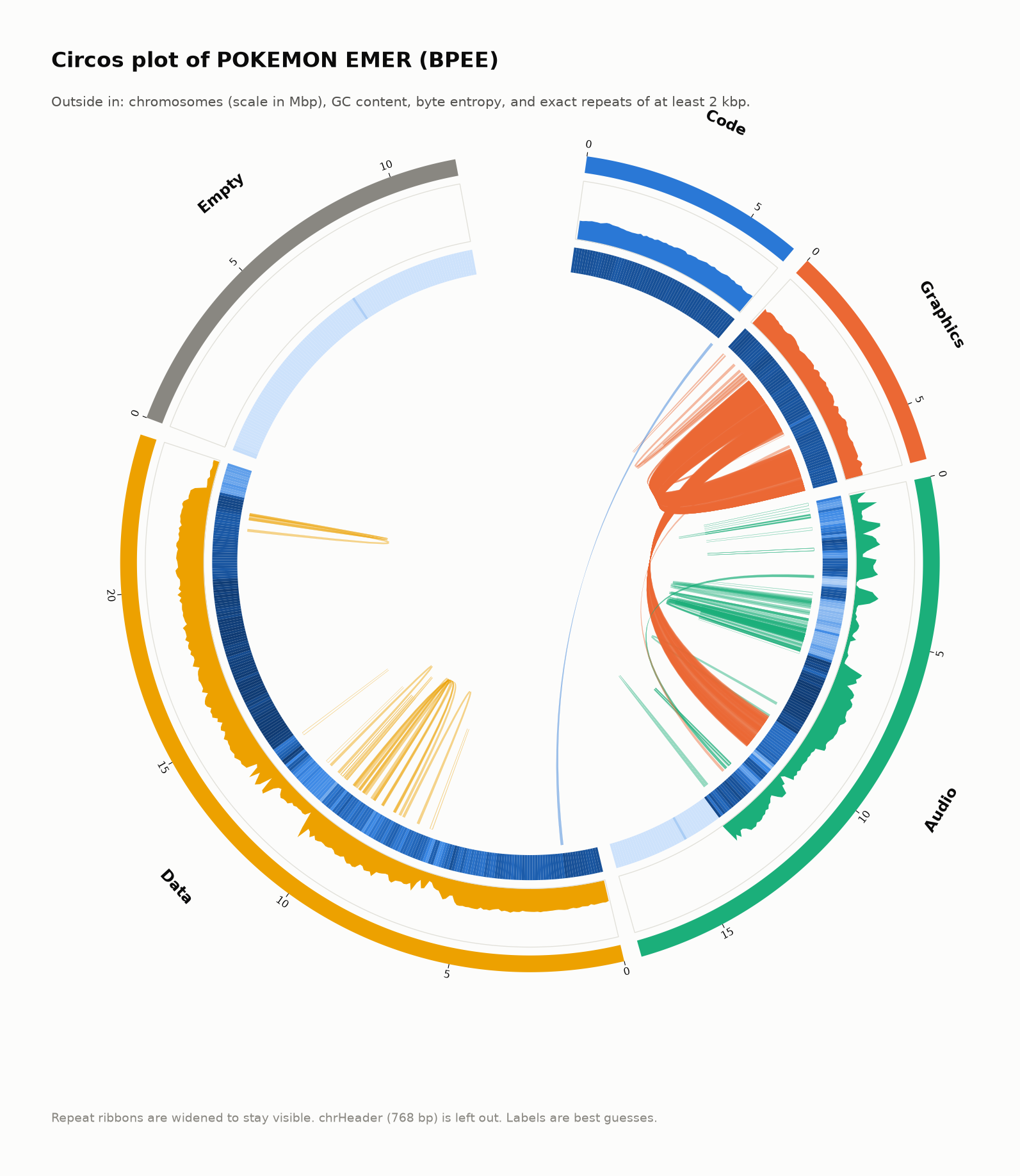
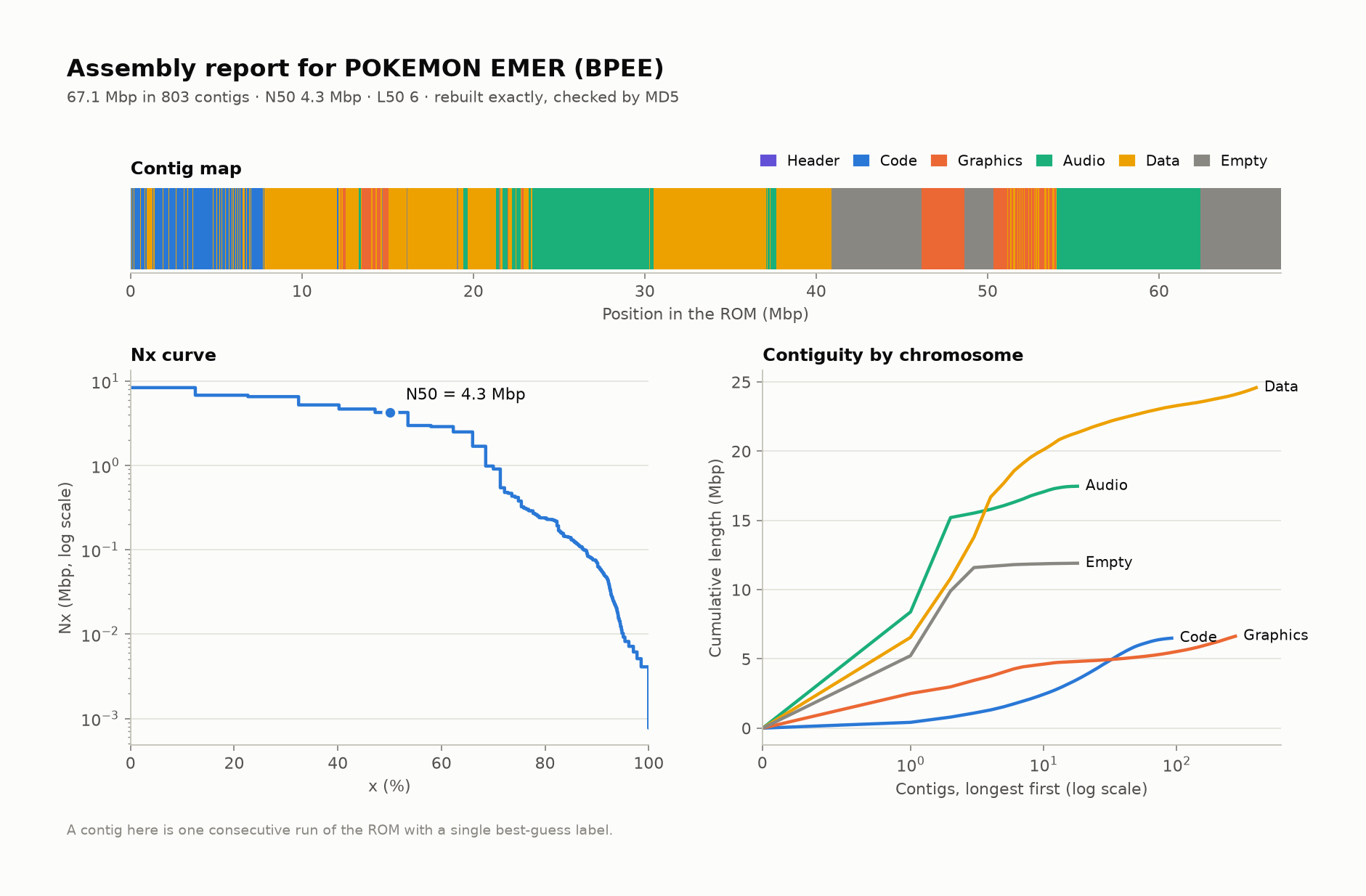
Make these for your own cartridge with gbadn-study.